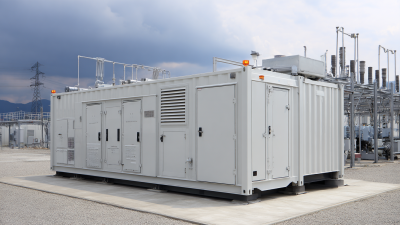
Picking the right container marine generator isn't just about looking at the rated power or the price tag. For port operators, shipyards, and fleet engineers, there's a lot more to consider—stuff like fuel efficiency, how it responds when loads change, how well it cools, and how easy it is to service. Sure, a generator might perform perfectly during factory testing, but then struggle in real-world conditions—being exposed to salty air, vibrations, or constant use in busy harbors. The truth is, actual operating conditions really matter.
In this guide, we’ll go over some leading manufacturers based in China and well-known global brands that serve container ships and marine auxiliary systems. Names like Weichai, Yuchai, SDEC, CSSC Marine Power, and Ningbo C.S.I. Power & Machinery are worth a close look. Of course, brands like Cummins, Caterpillar, Yanmar, and Kohler are also solid benchmarks for reliability and support. But don’t just take their word for it—make sure to verify claims with engine certificates, test reports, warranty details, and real-world fleet experiences. It’s also a good idea to get an independent inspection if possible.
Sometimes, small details matter a lot over the long haul. Things like the insulation class of the alternator, emergency shutdown features, how the exhaust system is set up, and whether spare parts are easy to get. You should also ask if technicians are available near the ports your vessel usually calls at. Don’t forget to check noise levels, fuel burn at partial loads, and how often maintenance is needed. Often, these little points give you way more insight than flashy brochures or advertisements.
Of course, no list of recommendations is perfect. Things like supplier capacity, export support, and product availability can change pretty quickly. Plus, some specs might vary depending on the configuration or the market you’re targeting. The best approach is to double-check current info directly with the manufacturer and talk to qualified marine engineers. At the end of the day, a reliable choice comes from balancing solid technical info, practical experience, and after-sales support you can count on. That’s what keeps things running smoothly, keeps the crew safe, and your operating costs in check—over countless voyages.

Definition and Role of Container Marine Generators
A container marine generator is a compact power unit installed inside a shipping container. It normally combines a diesel engine, alternator, fuel system, cooling equipment, and control panel. Its role is to produce dependable electricity for vessels, offshore equipment, ports, or temporary marine operations. Unlike a standard land generator, it must manage salt air, vibration, limited ventilation, and changing electrical loads. The container also provides weather protection and simplifies transportation between working locations.
In practical inspections, airflow and exhaust routing deserve close attention. Poor ventilation can raise engine temperature within minutes. A reliable unit should match the vessel’s voltage, frequency, starting load, and continuous power demand. Protection systems should monitor oil pressure, coolant temperature, overloads, and emergency shutdown conditions. When comparing China-based manufacturers, buyers should review test records, component traceability, service capability, and technical documentation. A low purchase price may hide difficult maintenance later. Real installations are rarely perfect. Field conditions often reveal weaknesses that factory data does not show.
Tips:
Measure the actual load before choosing capacity. Leave space around intake and exhaust openings. Check noise and vibration during operation, not only at idle. Ask for fuel consumption at several load levels. Confirm corrosion protection for marine environments. Keep spare filters, belts, and sensors available. A small oversight can become an expensive delay. Recheck assumptions with an experienced marine electrician.
China’s Position in the Marine Generator Manufacturing Industry
China’s position in the marine generator manufacturing industry is strengthened by its broad shipbuilding ecosystem. UNCTAD’s Review of Maritime Transport 2024 reported that China completed roughly half of global newbuilding tonnage in 2023. Clarkson Research also placed China above 60% of the global newbuilding orderbook by gross tonnage during 2024. This concentration supports faster access to engines, alternators, control systems, and marine testing facilities.
Marine generator manufacturers benefit from shorter supply chains and practical shipyard feedback. Export projects now demand lower fuel use, remote monitoring, compact installation, and reliable performance in humid engine rooms. The IMO’s 2023 greenhouse-gas strategy is increasing pressure on suppliers to improve efficiency and prepare for alternative fuels. Yet compliance does not automatically mean quality. Documentation, load testing, vibration control, and service response still require careful checking. This is where some manufacturers remain uneven.
Tip: Check certification scope, not only certificates. Request test records, fuel-consumption curves, spare-parts lead times, and references from similar vessels. A generator may look strong on paper but perform differently under high humidity, unstable loads, or frequent port operation. Reviewing local technician coverage is equally important. China offers impressive manufacturing depth, although product consistency can vary between factories and production batches. Buyers should audit the workshop, verify component traceability, and test the complete system before shipment.
Top China Container Marine Generator Manufacturers - China’s Position in the Marine Generator Manufacturing Industry
| Industry Indicator |
2022 |
2023 |
2024 |
Relevance to Marine Generator Manufacturing |
| China ship completions |
37.86 million DWT |
42.32 million DWT |
42.93 million DWT |
Indicates the annual vessel-production base requiring auxiliary power and generator systems. |
| China new ship orders |
67.07 million DWT |
71.20 million DWT |
113.05 million DWT |
A leading indicator of future demand for marine engines, generator sets, control systems, and spare parts. |
| China shipbuilding orderbook |
105.57 million DWT |
139.39 million DWT |
208.17 million DWT |
Provides visibility into the medium-term installation and commissioning pipeline for marine generator equipment. |
| China share of global completions |
47.3% |
50.2% |
55.0% |
Demonstrates China’s expanding production ecosystem for vessel equipment and onboard power solutions. |
| China share of global new orders |
55.2% |
66.6% |
74.7% |
Signals strong future opportunities for suppliers serving newbuild container, bulk, tanker, and specialized vessels. |
| China share of global orderbook |
49.0% |
55.0% |
63.1% |
Reflects China’s strategic position in the global vessel-construction pipeline and marine equipment supply chain. |
| Global shipbuilding position |
Largest national shipbuilding industry by completion volume |
Largest national shipbuilding industry by completions, new orders, and orderbook |
Largest national shipbuilding industry by completions, new orders, and orderbook |
Supports a broad domestic market for marine generator integration, testing, installation, and after-sales service. |
| Key demand drivers |
Fleet renewal, vessel construction, and emissions compliance |
Higher newbuilding activity and expanding orderbook |
Strong new-order growth, decarbonization, and alternative-fuel adoption |
Creates demand for efficient, reliable, class-approved generator systems and hybrid or dual-fuel power solutions. |
Note: DWT means deadweight tonnage. Shipbuilding figures and global shares are industry-level indicators reported by China’s Ministry of Industry and Information Technology and industry associations; they describe the market environment rather than individual generator manufacturers or brands.
Key Types of Container Marine Generators Made in China
Top China Container Marine Generator Manufacturers
China-made container marine generators are built around several operating needs.
Medium-speed diesel gensets remain common for continuous auxiliary power, especially on large container ships. They support lighting, pumps, ventilation, refrigeration, and cargo-handling systems. High-speed diesel units suit smaller vessels and standby duties because they are compact and responsive. Emergency generators provide independent power after a main electrical failure. They must start quickly and remain separated from the main engine room.
Fuel transition is changing the product mix. Dual-fuel generators can use marine diesel oil or LNG, reducing dependence on one fuel system. Hybrid generator sets combine diesel power with lithium battery storage, helping vessels manage hotel loads and peak demand near ports. Shaft generators can also recover power from the propulsion line during sailing.
UNCTAD’s Review of Maritime Transport 2023 states that shipping carries over 80% of global trade by volume. Reliability is not optional.
Emission pressure is increasing. The IMO 2023 GHG Strategy targets net-zero emissions from international shipping around 2050, with 2030 and 2040 reduction checkpoints. Therefore, Chinese production increasingly emphasizes fuel efficiency, load-sharing controls, vibration resistance, and remote monitoring. CCS and other classification requirements remain important during approval.
A practical weakness remains: hybrid systems may save fuel, but battery weight, thermal management, and replacement costs can complicate installation. DNV’s Maritime Forecast to 2050 also warns that no single fuel pathway will fit every vessel. Selection still requires route data, load profiles, maintenance access, and crew experience.
Leading Manufacturer Selection Criteria
Selecting a China-based container marine generator manufacturer requires more than comparing prices. Field experience shows that packaging, testing, and service often determine long-term value.
Check whether the manufacturer understands marine operating conditions. Salt spray, vibration, humidity, and limited ventilation can expose weak designs quickly. Ask for load-bank test records, insulation results, and factory acceptance procedures. The generator should respond smoothly when refrigerated containers start together. Engine and alternator matching matters here. A cheap combination may produce unstable voltage. That becomes expensive.
Review compliance documents carefully. Relevant marine standards, electrical safety requirements, emissions rules, and container dimensions should be clearly addressed. Traceable serial numbers and complete wiring diagrams indicate stronger quality control. Ask how the factory handles corrosion protection around doors, hinges, cable glands, and exhaust outlets. These small areas often fail first. Do not accept vague answers.
Service capability deserves equal attention. Confirm spare-parts availability, remote troubleshooting, technician response times, and warranty exclusions in writing. Request references from operators using similar units in hot, humid, or dusty ports. A professional manufacturer should explain fuel consumption at several load levels, not only at rated output. One weakness remains: documents can look perfect while production varies between batches. Independent inspection and a witnessed test reduce that risk. Even experienced buyers can miss noise behavior after installation. A site trial may reveal what laboratory figures cannot.
Core Technologies and Quality Standards
Top China Container Marine Generator Manufacturers
Core technologies and quality standards determine whether a container marine generator performs reliably at sea. Experienced manufacturers design around salt air, vibration, humidity, and limited maintenance space. A corrosion-resistant enclosure protects electrical components, while an efficient cooling system prevents overheating during long voyages. Automatic voltage regulation should keep output stable when reefer containers start or stop suddenly. Reliable controllers also record alarms, oil pressure, coolant temperature, and running hours.
Quality testing must go beyond a factory start-up. Manufacturers should verify load performance, insulation resistance, fuel consumption, vibration, noise, and emergency shutdown functions. Standards such as ISO 8528 support generator-set performance evaluation, while ISO 9001 strengthens process control and traceability. Marine projects may also require classification or safety approvals from recognized authorities. These approvals should match the vessel’s route and operating conditions. Paperwork alone is not enough. A clean test report cannot replace practical inspection.
Tips: Ask for a full-load test record, material certificates, and maintenance intervals. Check whether spare parts remain available after delivery. Inspect cable glands, door seals, grounding points, and exhaust joints carefully. In field experience, small sealing defects often become expensive problems. A thoughtful supplier should explain both strengths and limitations. No test plan is perfect. Salt-spray testing may not reproduce every ocean environment, so periodic onboard inspection still matters.
Top China Container Marine Generator Manufacturers: Core Technologies and Quality Standards
IMO MARPOL Annex VI NOx emission limits for marine engines operating between 130 and 2,000 rpm
The chart compares the IMO Tier II and Tier III NOx limits at common marine generator engine speeds. Tier III requires substantially lower nitrogen oxide emissions, supporting core technologies such as electronic fuel injection, turbocharging, charge-air optimization, exhaust-gas recirculation, and selective catalytic reduction. Related quality frameworks commonly include ISO 8528 for generating sets, ISO 3046 for reciprocating engines, IEC 60092 for electrical installations on ships, and IMO MARPOL Annex VI for emissions.
Applications, Maintenance, and Export Considerations
Top China Container Marine Generator Manufacturers
Container vessels use marine generators for hotel loads, refrigeration, navigation, pumps, and emergency power. The demand is substantial. UNCTAD’s Review of Maritime Transport 2024 reports that the global commercial fleet exceeded 2.4 billion deadweight tons, with fleet capacity growing about 3.4% in 2023. For Chinese manufacturers, this means generators must handle long voyages, salt exposure, unstable loads, and frequent reefer connections. A practical selection should match rated power, voltage, frequency, fuel type, classification requirements, and available engine-room space.
Do not size only for average load. Crane starts and refrigeration peaks can expose weak margins.
Maintenance quality often determines service life more than brochure specifications. Operators should inspect fuel filters, cooling-water pressure, exhaust temperature, battery condition, and vibration trends during every planned service. Load-bank testing can reveal problems that no idle test will show. Keep parts traceable and record running hours. Small details matter.
IMO’s 2023 GHG Strategy targets net-zero emissions from international shipping by around 2050, with indicative reduction checkpoints for 2030 and 2040. Therefore, fuel efficiency, emissions monitoring, and compatibility with lower-carbon fuels deserve attention during procurement. Yet some assumptions fail at sea. A generator can pass a factory test and still disappoint offshore.
Export projects require more than a packing list. Buyers should request factory test records, class documentation, wiring diagrams, spare-parts lists, manuals, and clear warranty terms. Equipment may need alignment with SOLAS, MARPOL Annex VI, ISO 8528, and the selected classification society’s rules.
Check 50 or 60 Hz requirements carefully. Ambient temperature, altitude, humidity, and containerized ventilation can reduce output. Customs codes, wooden-case treatment, shock protection, and destination-port service support should be confirmed before shipment.
Marine Diesel Generator Set with CCS Standard: Reliable Power for Safe and Efficient Vessel Operations
Marine diesel generator sets with CCS standards are engineered to deliver dependable electrical power in demanding maritime environments. Designed for commercial ships, passenger vessels, fishing boats, and other marine applications, these systems provide stable energy for navigation equipment, communication systems, lighting, pumps, refrigeration, and essential onboard operations. Their robust construction helps them withstand vibration, humidity, salt-laden air, and changing sea conditions, supporting reliable performance during extended voyages.
Built around efficient diesel engines and carefully matched generating components, the sets offer strong power output, smooth operation, and practical compatibility with different vessel systems. Compliance with CCS standards reflects attention to marine safety, quality control, inspection, and operational reliability. User-friendly monitoring and protection functions can help operators identify abnormal conditions early, manage fuel consumption, and maintain consistent power availability. With flexible configuration options and service-friendly design, these marine generator sets support safer, more efficient vessel operations while reducing the risks associated with unstable onboard power.
FAQS
It is a compact power unit installed inside a shipping container. It usually combines a diesel engine, alternator, fuel system, cooling equipment, and control panel. The container protects equipment from weather and simplifies transport between marine locations.
It can support vessels, offshore equipment, ports, and temporary marine operations. It must handle salt air, vibration, limited ventilation, and changing electrical loads. Conditions matter.
Measure the actual continuous load before choosing capacity. Check voltage, frequency, starting load, and expected peak demand. Motors may require much more power during startup. Do not rely only on estimated figures.
Poor airflow can raise engine temperature within minutes. Keep clear space around intake and exhaust openings. Inspect airflow during full-load operation, not only during idle testing. Small gaps can cause large problems.
Protection systems should monitor oil pressure, coolant temperature, overloads, and emergency shutdown conditions. The control panel should provide clear alarms and readable operating data. Test each shutdown function before shipment.
Salt air can accelerate corrosion on metal parts and electrical connections. Vibration may loosen fittings, damage wiring, or reduce component life. Confirm marine-grade corrosion protection and inspect mounting points carefully. Humidity changes everything.
Review certification scope, test records, component traceability, and technical documentation. Request fuel-consumption curves at several load levels. Check spare-parts lead times and local technician coverage. A low price may create expensive maintenance later.
No. Manufacturing depth can improve supply access and shipyard support. However, quality may vary between factories and production batches. Audit the workshop and test the complete system before shipment. Paperwork is not performance.
Keep spare filters, belts, and sensors available. Check fuel use, noise, vibration, and temperatures during operation. Confirm service response before an urgent repair is needed. We may still miss something.
Conclusion
Container Marine Generator systems are essential power solutions designed to provide reliable electricity for vessels, offshore facilities, and transportable marine operations. Their containerized structure supports efficient installation, protection from harsh environmental conditions, noise control, and convenient transportation. China has developed a strong position in the marine generator manufacturing industry through mature industrial supply chains, engineering capabilities, and expanding export experience. Chinese manufacturers commonly produce diesel, gas, emergency standby, and hybrid generator systems in various power ranges to meet different vessel and project requirements.
When selecting a manufacturer, buyers should evaluate production capacity, technical expertise, customization services, delivery performance, and after-sales support. Core technologies include efficient engines, intelligent control systems, fuel management, vibration reduction, corrosion protection, and emissions optimization. Compliance with recognized marine quality and safety standards is also essential. These generators are widely used on cargo ships, workboats, offshore platforms, and port facilities. Regular inspections, load testing, filter replacement, cooling-system maintenance, and proper storage help ensure long service life. Export planning should also consider documentation, certification, climate adaptation, shipping protection, installation guidance, and local service arrangements.